
For established coaches with a calendar full of free calls and a folder full of content
Turn what you've already made into a small product people pay for before they ever book a call with you.
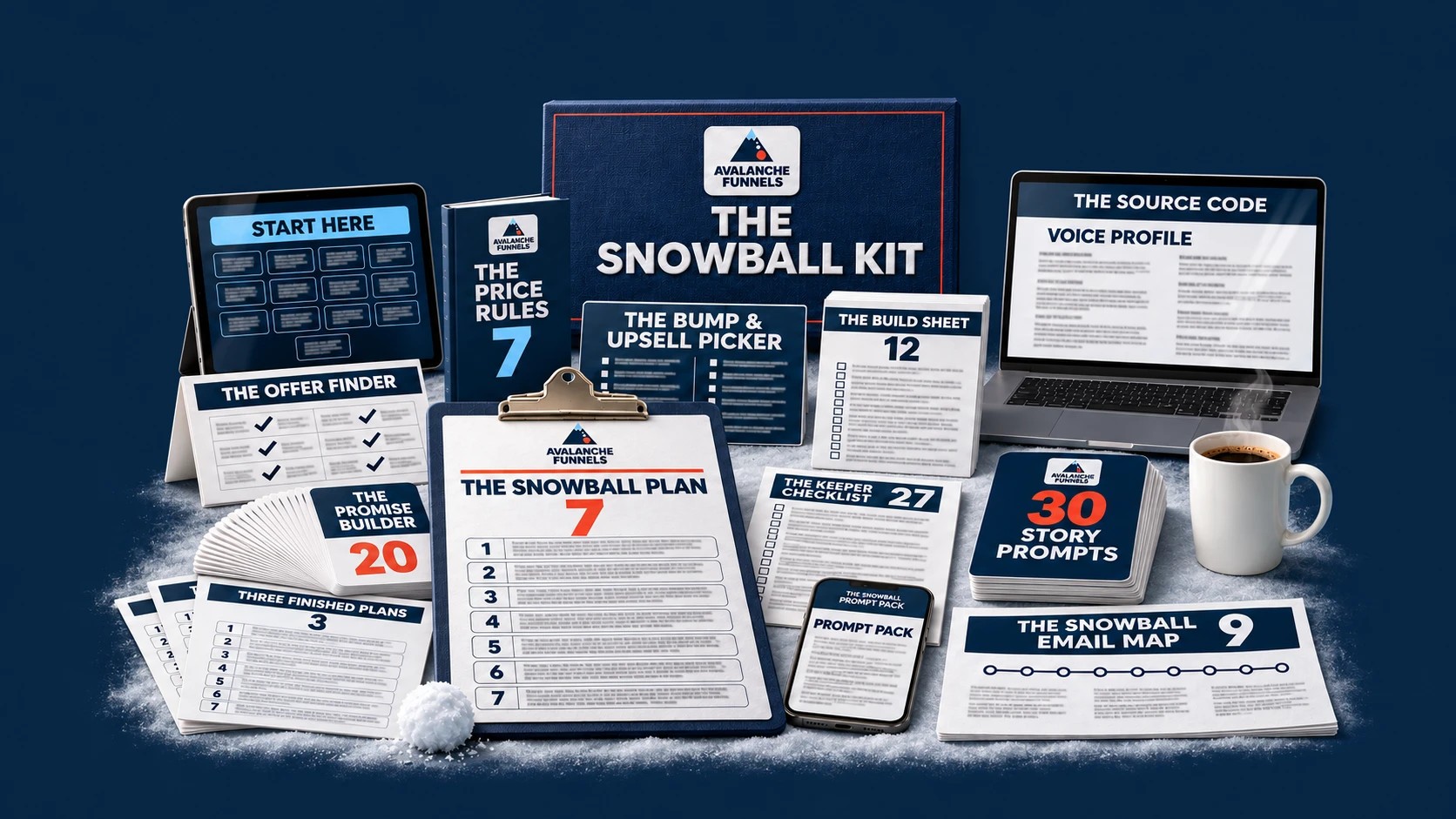
By tonight you could know exactly what to sell, what to charge, and what sells right next to it, pulled out of the emails, videos and calls already sitting in your folder, in your own words. One sitting. One page. Nothing new to make. That's The Snowball Kit.
Get The Snowball KitOne payment. Instant access. Thirty days, every penny back.
Four calls on the calendar. Two show up.
Picture Tuesday. Four calls booked. Two don't show. One opens with "I'm just picking your brain, I'm not really looking to buy anything." The fourth loved it and needs to think about it, and you already know what that means.
And the whole time there's a folder on your laptop. Four years of emails. A course. A hundred videos. Recordings of you explaining the same thing for the thousandth time.
Not one thing in that folder is something a stranger can buy.
So you've thought about a small product. If we're honest, you've been thinking about it for a while. And the thinking is the problem. Every idea looks as good as the next one, so none of them gets made, and the calendar keeps doing what it does.
What used to fill the calendar stopped working. That isn't your fault.
Post. Give away a guide. Get a stranger on Zoom. Sell them something expensive in forty-five minutes. It worked when strangers were cheap and showed up. Now they're expensive and they don't.
The video that used to get people to book doesn't get finished anymore. The free guide builds a list of people who collect free guides. And the calls that do happen end more and more with "I'm going to talk to a few other coaches before I decide."
So you buy a course on funnels, and it's the playbook you already know, in eleven modules, with a pitch at the end for the expensive thing. Or you buy templates, and six weeks later your page sounds like everyone else who bought the same templates. You read it back and think, "is this really how I talk?"
Neither one answers the only question that matters. Which piece of your content is the product. What it promises. What it costs. What sits next to it at checkout. Where the buyer goes after.
That's a plan, not a course. And nobody hands you the plan. They sell you the playbook again.
A buyer beats a booking
Here's what I'd tell you if we were on a call. Sell something small first.
A booking
- Found you, booked a slot, risked nothing
- Doesn't show, or shows and needs to think about it
- Talking to three other coaches the same week
- Starts the call wondering if you're worth it
A buyer
- Pulled out a card and paid you, on purpose
- Used the thing before the call
- Said yes once, with their own money
- Starts the call already a buyer
A follower isn't a customer. A free lead downloaded something and maybe read it. A buyer pulled out a card and paid you. Even a small amount. They said yes once, with their own money. The next yes starts from there.
So the person on your next call has paid you before, used the thing, and showed up already a buyer. That's a different call. That's a different calendar.
The cheap buyer is the one who paid nothing
I know the fear, because every coach has it. That a $27 buyer is a cheap buyer. That they'll never take you seriously and never buy the real thing.
Think about it from the other side. The cheap buyer is the one who paid nothing. The person who paid $27 chose you, on purpose, with their own money, without a call first. Nobody else on your list has done that.
And you don't have to make the small product. If you've got a library, it's already in the folder. The job isn't the making. The job is the deciding, and the deciding fits on one page.
Get The Snowball KitOne payment. Instant access. Thirty days, every penny back.
Why it comes out sounding like you, and not like a template
You can't tell which of your own ideas a stranger would pay for. You're too close to all of them. And you can't write a promise that sounds like you by staring at a blank page. Those two things are what keep the folder closed, and no course or template fixes either one.
So the kit starts somewhere else: with what you've already written and said.
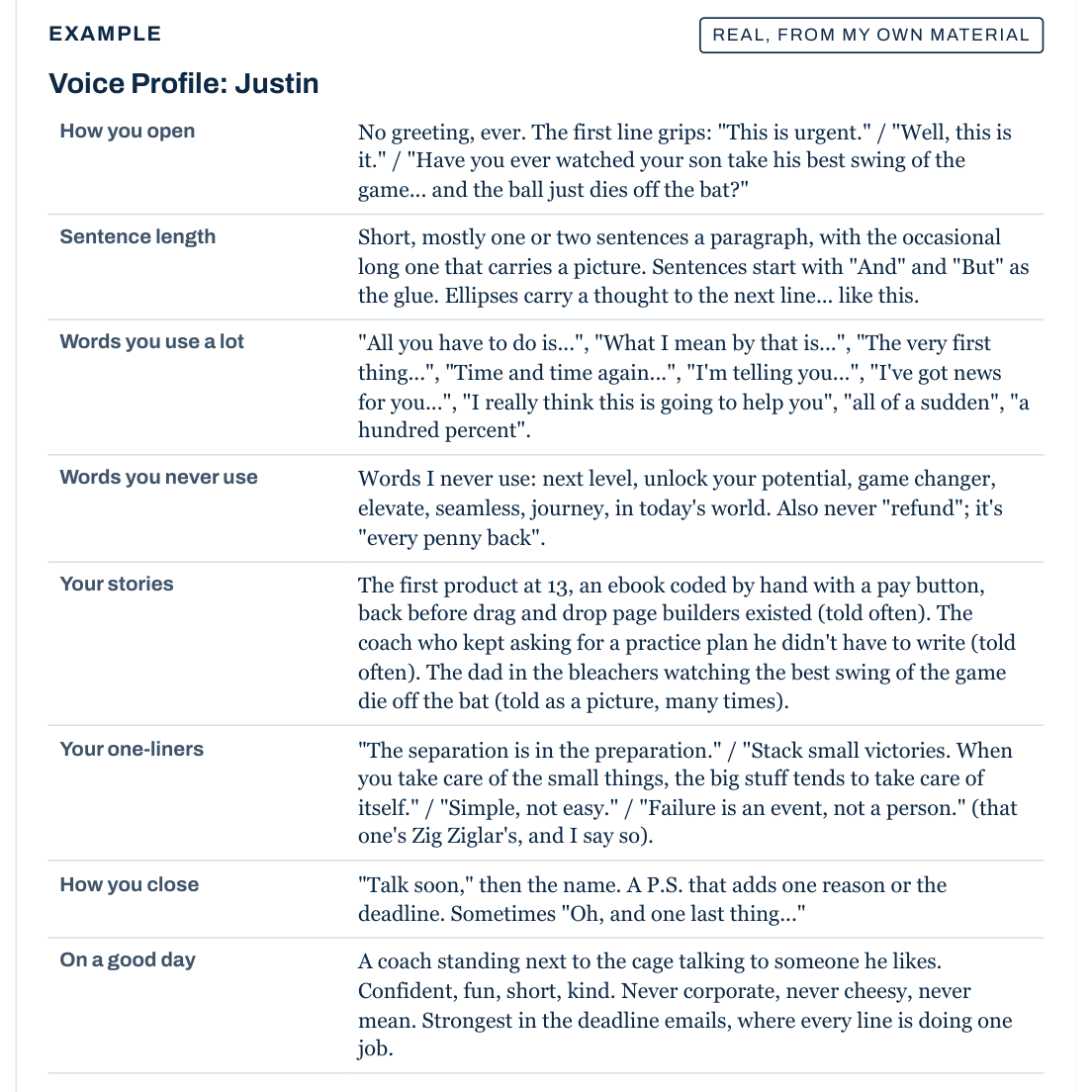
You gather 20 to 30 of your old emails and the transcripts of up to five videos or calls (about twenty minutes; the kit shows you how, including what to do with a raw video file). You paste one prompt into ChatGPT or Claude. Out come two files: how you actually talk when you're good, and every idea, story and lesson you've already taught, sorted, with the product-shaped ones flagged. You don't rewatch a single video. You don't reread a single email.
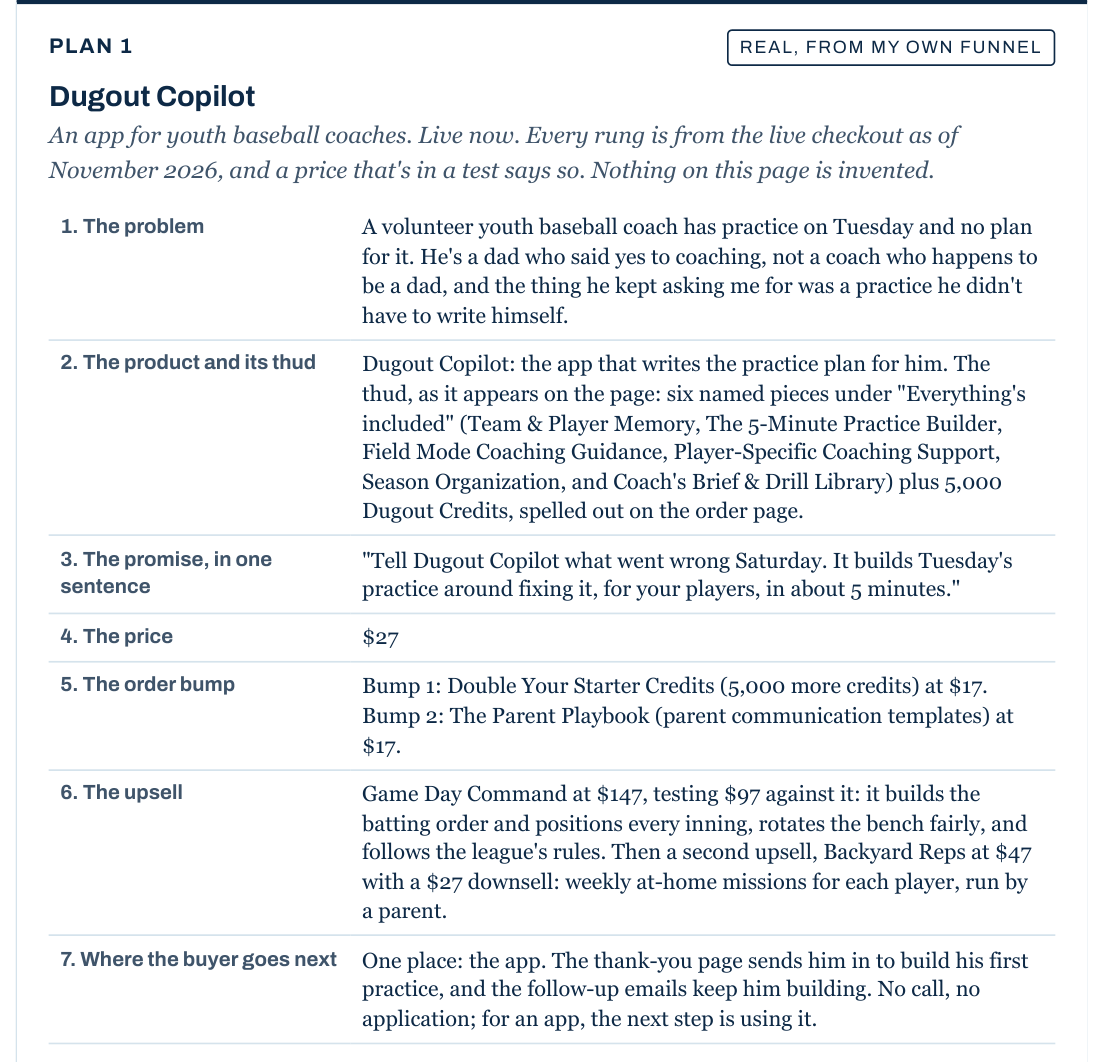
Then you make seven decisions, each in its own box on one page. The problem. The product, and what makes a buyer feel they got a lot for the money. The promise. The price. One order bump. One upsell. Where the buyer goes next. Every decision comes off those two files, so the words are yours, and every decision is made with a grid or a rule, not a guess.
If "order bump" or "upsell" is new to you, the first piece of the kit explains all five of the words people throw around (front end, order bump, upsell, thank-you page, follow-ups), each with an everyday example. The order bump is the pack of gum by the register. The upsell is the dessert menu after the meal.
The prompts do the reading. The decisions are the product. Which brings up the question everyone asks me next: who are you, and why don't you just run this yourself?
Get The Snowball KitOne payment. Instant access. Thirty days, every penny back.
I run this myself. With my own money. Right now.

I'm Justin Willman. I've been selling things online since I was 13. The first one was a hitting ebook I coded by hand, with a PayPal button on a page that was not pretty. It sold. I was hooked. More than 12,000 orders across my own brands later, I still start every product the same way: small first.
The newest one is Dugout Copilot, an app I built for youth baseball coaches. A $27 product, two order bumps, two upsells (you'll plan one of each to start; I run two because the app has two things worth adding), all of it running on my own money today. Here's its checkout page, as it is right now:
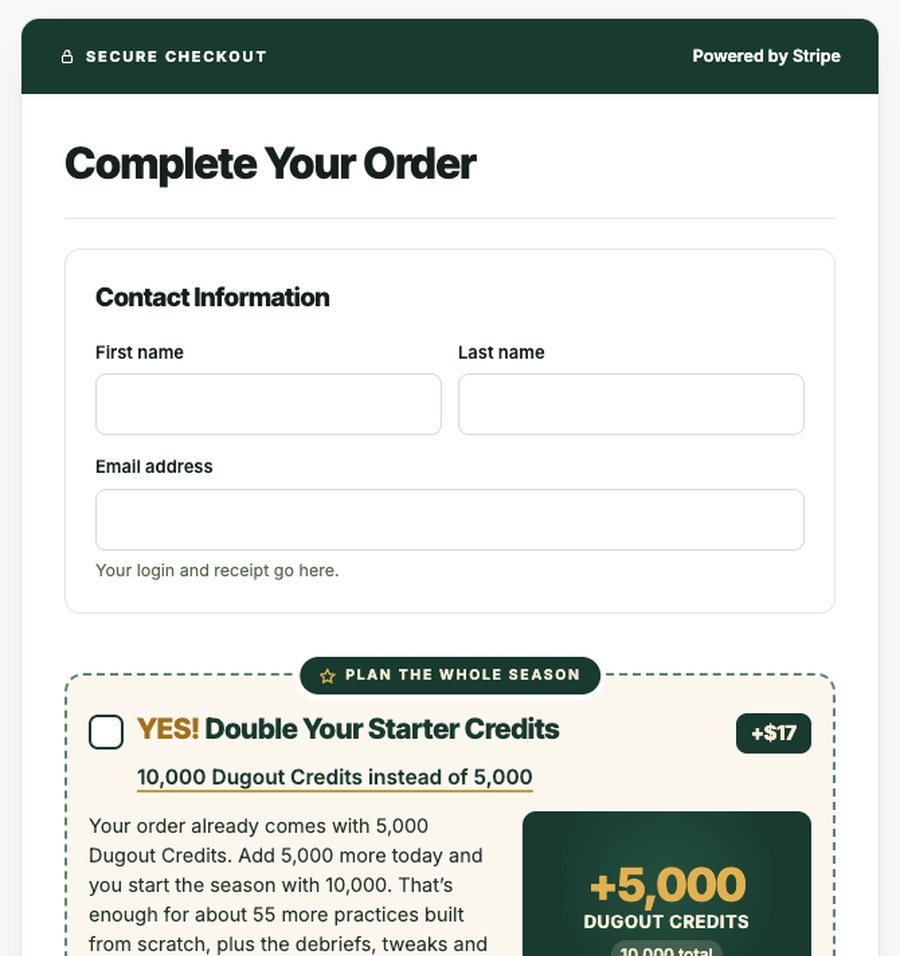
People ask, "if this works, why don't you just run it yourself?" I do. Every day. I'm not telling you what worked ten years ago. I'm telling you what I'm running in my own brands right now, including the parts I'm still testing.
The Build, where I do the whole funnel for a coach, is $5,000. Week one of that work is this plan. The plan is the kit.
Here's what lands on your delivery page the minute you pay
One delivery page. A START HERE page tells you what to open first. Every fill-in piece is a PDF to read and a Word file to type into (they open in Google Docs too), so by the end of the sitting the plan is typed, not scribbled.
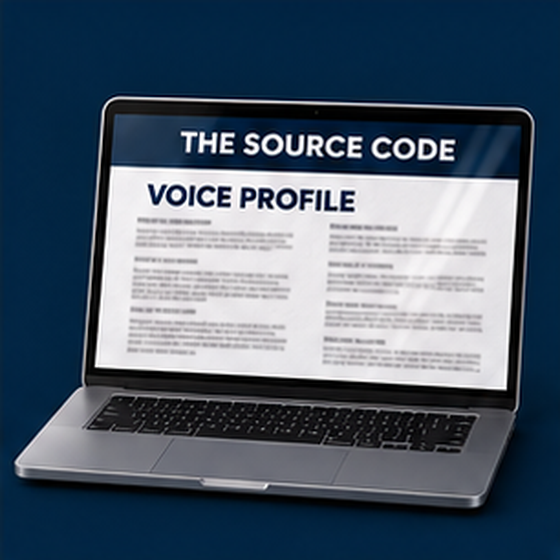
The Source Code
Your voice and your best ideas, pulled from what you already have
Gather, paste one prompt, get the two files everything else is built from. If your program sells but you've never written much down, there's an interview route: twelve questions you answer out loud.
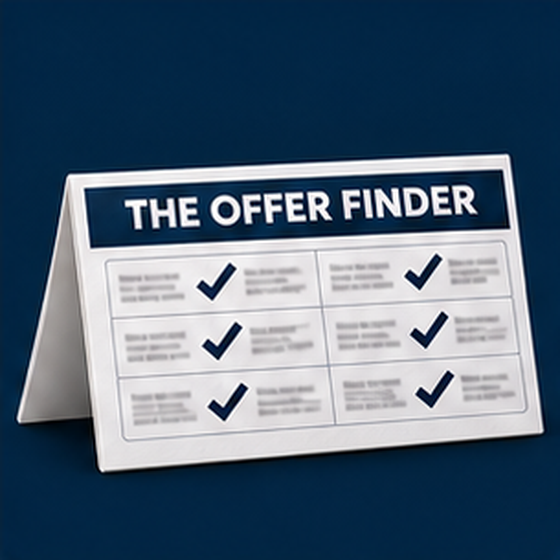
The Offer Finder
Three questions that point at the one piece a stranger would pay for today
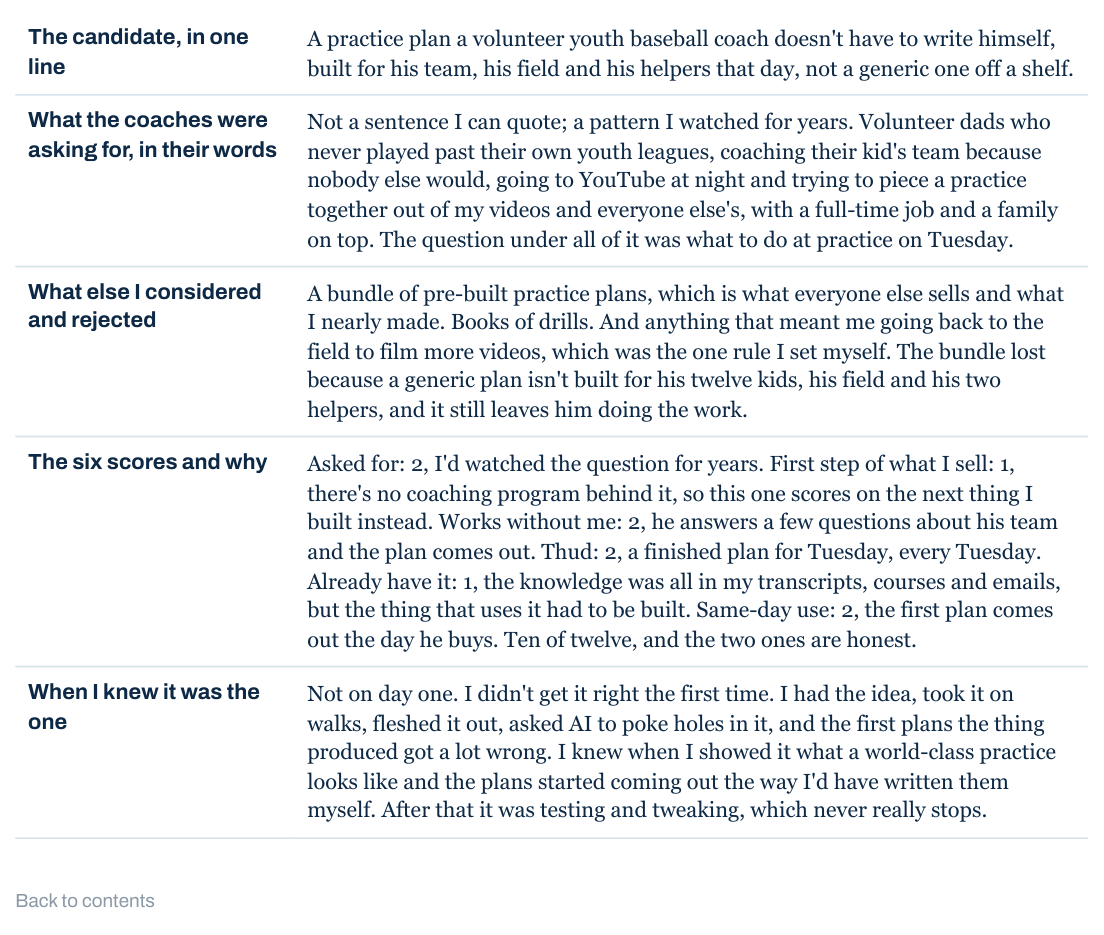
Score your ideas on a six-check grid and one wins. My own worked example is on the page, scored, including what I threw out.
The Price Rules
What to charge, what the bump should cost, what the upsell should cost, and why
The seven rules I actually use, including why I start at $27 and the price band I stay out of. You set your three prices on the last page.
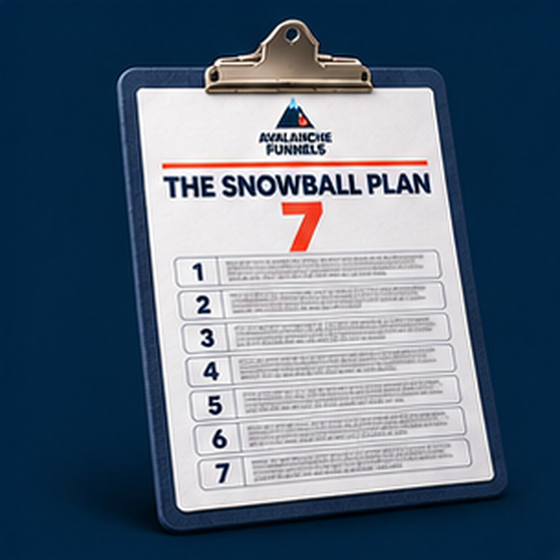
The Snowball Plan
The one page. Seven boxes. Yours to fill in.
What week one of a $5,000 Build produces. Every other piece feeds a box on it.
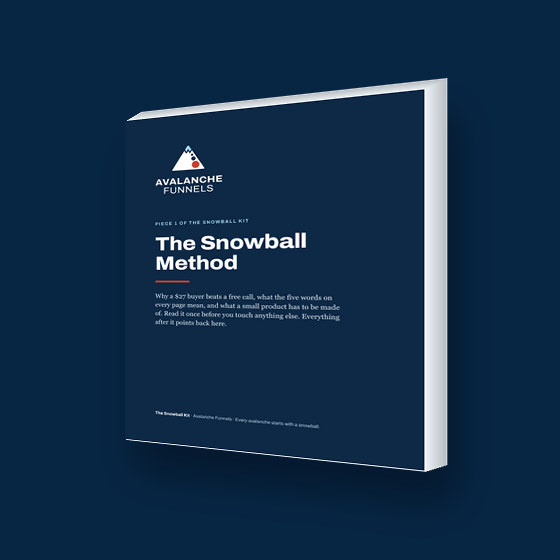
The Snowball Method
Why a $27 buyer beats a free call, in fifteen minutes
The five words, each with an everyday example, and the four things every good small product has.
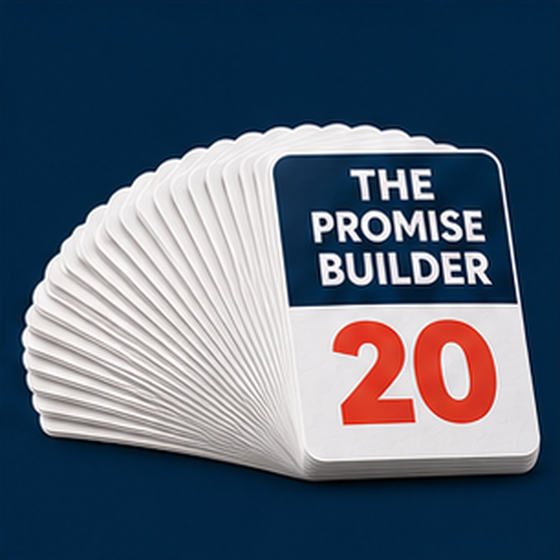
The Promise Builder
One sentence that says exactly what they get, with 20 finished examples
Four blanks, a five-point check, and my rule for the name on the cover.
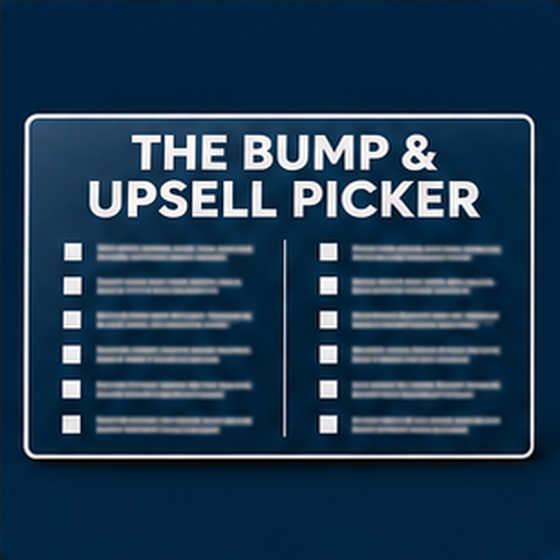
The Bump & Upsell Picker
Pick the add-on and the next step from a menu, not from scratch
Six bump shapes, six upsell shapes, and the two rules that decide: a bump is a yes without thinking, an upsell is a yes after a breath.
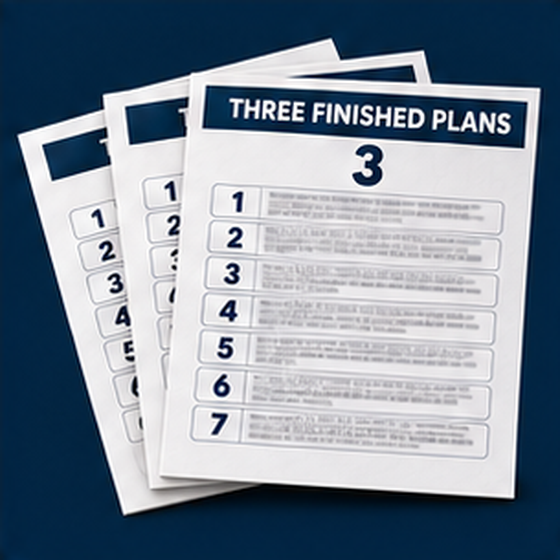
Three Finished Plans
My real plan with real prices, plus two written as illustrations
Dugout Copilot's product, bumps and upsells, box by box, with the reasoning. Then two illustrations: a coach whose $2,400 program sells on calls and is taught in order, and a career coach with a dusty course and a list.
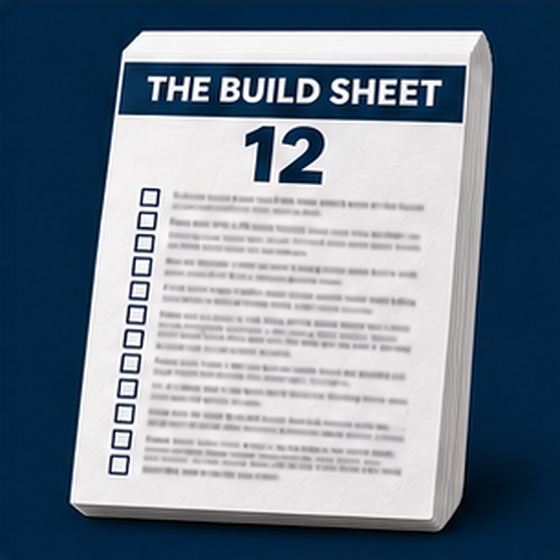
The Build Sheet
Everything between your finished plan and a live checkout
Twelve lines, each with how long it takes a first-timer, what usually goes wrong, and whether to do it yourself or hand it off.
Get The Snowball Kit, $27One payment. Instant access. Thirty days, every penny back.
Four bonuses, included free
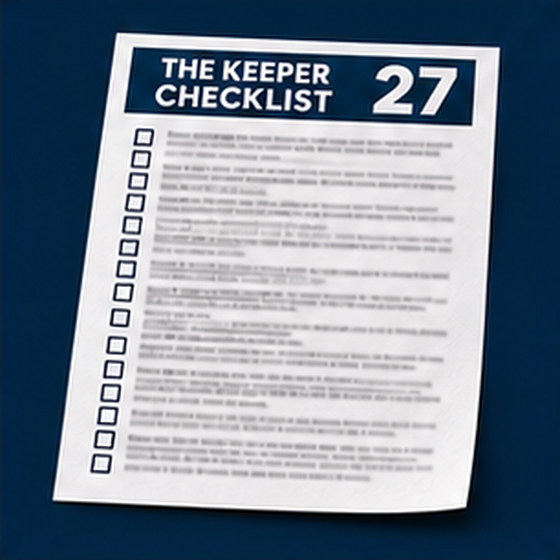
The Keeper Checklist
The 27 checks I run on my own products before anyone pays for them
From "does the title say the thing" to "can they use something out of it the same day they open it."
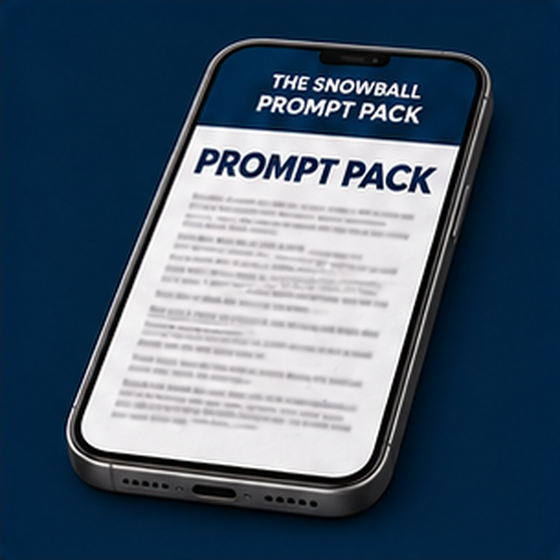
The Snowball Prompt Pack
Every prompt in the kit, in one text file
So nothing gets retyped out of a PDF. Paste into ChatGPT or Claude.
30 Story Prompts
The stories you've already lived, surfaced so your product and your emails sound like a person
Answer ten and you've got your sales page, your welcome email and a month of posts.
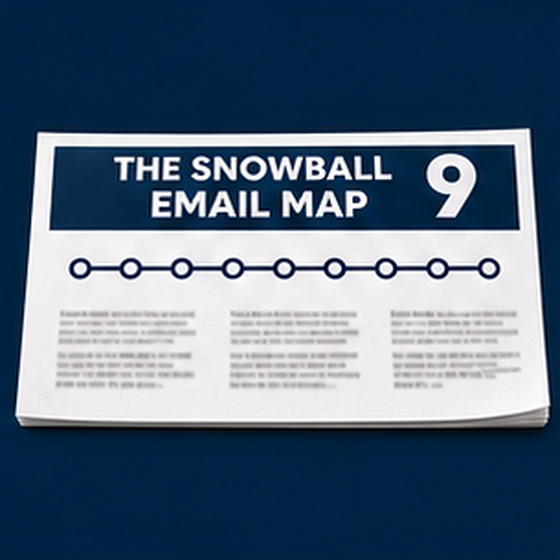
The Snowball Email Map
What each of the nine emails around a purchase is for, and when it goes
The same map my own emails to you follow, so you'll watch it work on you.
Why it's $27
Because $27 is where I start every small product I build, and I'd be a hypocrite to do otherwise with this one. The Price Rules will show you why.
The only other way to get this page is to hire me to build the whole funnel, and the page is week one of that. You're doing the filling-in yourself, so it's $27. That's not a sale price. There's no timer on it. It's the price.
Get The Snowball Kit, $27One payment. Instant access. Thirty days, every penny back.
Thirty days. No questions, no hoops.
If the kit isn't for you, tell me inside 30 days and you get every penny back. Nothing to prove, no form, no call.
I'll ask you one thing, "what wasn't right?", because the answer makes the kit better. You don't have to answer it to get your money.
Get The Snowball Kit, $27One payment. Instant access. Thirty days, every penny back.
Before you grab it, the questions I get
How long does it actually take?
One sitting, if you do it in order. About twenty minutes to gather, then the prompt runs while you make coffee. Then about an hour and a half across the Offer Finder, the Promise Builder and the plan. START HERE gives the order and the time for each piece.
Is this for beginners?
No. The kit needs a program that already sells behind the small product, because that's where the small product comes from and where the buyer goes next. If you're still looking for your first client, come back when you've got one. The interview route is for coaches who sell but haven't written much down, not for coaches who haven't sold yet.
Won't a $27 product cheapen my program?
Not if it's an earlier, smaller slice of the same road, and that holds whether the program is $2,000 or $12,000. The Offer Finder's second question is "what's the first real step of your program," and that's the first place I look for the small product: the step you've been giving away on free calls anyway. You sell the step. You keep the program. The second finished plan in the kit is exactly that case, a method that has to be taught in order, and the start is the product.
Will it sound like me, or like AI?
Every prompt that writes anything reads your own voice file first, and the examples are illustrations so you can see the shape. The words on your page come out of your emails, not a template's. The picture above of my own voice file is what the first output looks like.
What do I need to have?
Twenty or thirty old emails, or posts if you don't have emails. Up to five videos or recorded calls; the kit shows you how to get the transcript out of each. An account with ChatGPT or Claude. And if your clients' names are in those emails, the gathering checklist has you take them out before you paste anything.
I don't coach baseball. Why is a baseball app in here?
Because it's a live small-product funnel with real prices, running on my own money, and a finished plan with real numbers teaches more than a plan with round ones. You don't need to care about baseball. Next to it are two example plans written as illustrations: a coach whose $2,400 program sells on calls and has to be taught in order, and a career coach with a dusty course and a list.
Is this just a way to sell me the $5,000 build?
The kit is complete at $27, and everything you make with it is yours: the plan, the files, whatever you build from them. The Build Sheet's last line is the Build, where I do it for you, and there's a call for people who read that and want to ask what it costs. Nobody's booking you onto one. The only call on offer is one you'd ask for.
Do $27 buyers ever buy the big thing?
Some do, some don't, and I won't give you a number, because nobody honest can. What changes is who's on the call: someone who has paid you before, used the thing, and showed up already a buyer. The kit is built so your small product points at your program on purpose, not by accident. That's the whole reason to grab it.
Two ways tonight goes
You could keep thinking about which piece of your content should be the product. You've been thinking about it for a while, and the calendar isn't changing while you think.
Or you could sit down with the one page every funnel I build starts from, fill in seven boxes, and know.
Two minutes from now you'd have the delivery page open and the START HERE page read. By the end of tonight you'd have your two files back and the seven boxes filled in. Thirty days to decide if it was worth $27. Every penny back if it wasn't.
Get The Snowball Kit, $27One payment. Instant access. Thirty days, every penny back.
Talk soon,
Justin
P.S. The last piece in the kit is the honest list of what it takes to build the plan once it's filled in. Read it and build, or read it and ask me to. Either way, the sitting ends with the page full and the decision made, which is more than another year of thinking about it would give you.